
La Razón has published an article about wildfire prevention in Spain. The report examines how the country distributes public resources between prevention and fire suppression.
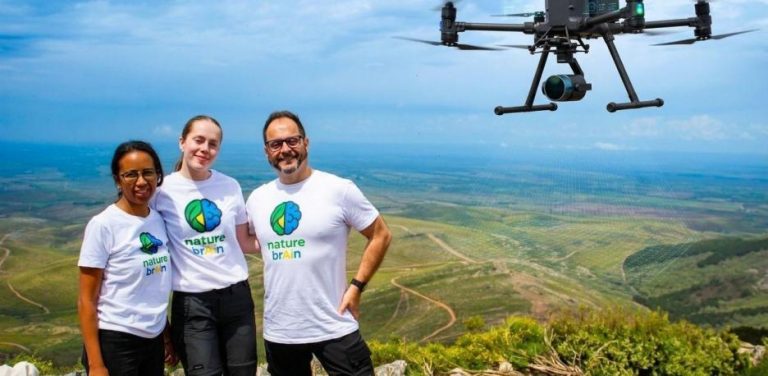
The article also includes the perspective of NatureBrain and Miguel Ángel García Tamargo, Founder and CEO. It highlights the need to measure the environmental and economic value of forests before damage occurs.
Spain invests more in suppression than prevention
La Razón highlights a major imbalance in Spain’s wildfire spending.
Around 78% of public resources go towards extinguishing fires. In contrast, only 12% goes towards prevention.
This model focuses on reacting after a wildfire has already started. However, prevention receives a much smaller share of available resources.
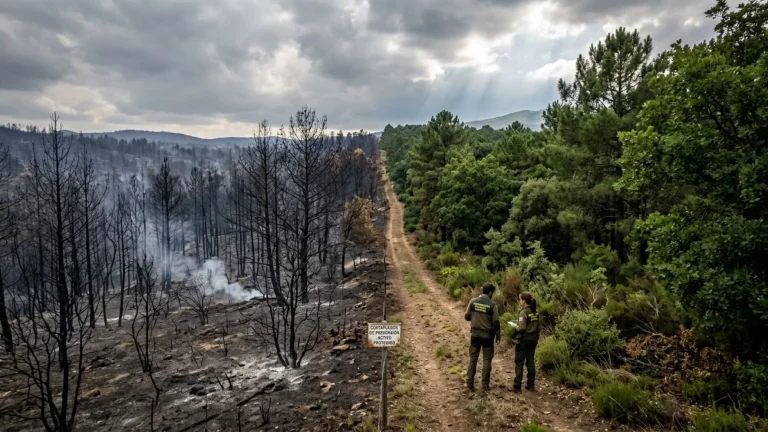
The issue has become even more urgent this year. According to the figures reported by La Razón, more than 55,000 hectares have already burned. This represents more than twice the area recorded during the same period last year.
These figures show the need for a different approach. Spain must continue to respond to active fires. At the same time, it must invest more in forest management and long-term risk reduction.
The economic value of a healthy forest
Forests create value long before that value appears on a financial statement.
They capture and store carbon. They also regulate water, protect soil and support biodiversity. In addition, forests strengthen local economies and nearby communities.
However, traditional financial systems often fail to measure these benefits.
As a result, organisations may see forest protection as an expense. The economic consequences only become clear after a fire destroys the natural asset.
La Razón refers to estimates from the Spanish forestry association ASEMFO. According to these estimates, each burned hectare can generate losses of up to €19,000.
Wildfires can also affect economic activity across entire regions. Furthermore, restoring damaged land may cost more than extinguishing the original fire.
Therefore, prevention should not be treated as an optional environmental expense. It should form part of a wider strategy to protect valuable natural assets.
From environmental protection to asset protection
Miguel Ángel García Tamargo explains this challenge in the article.
Forests often lack a recognised financial value before a wildfire occurs. This makes it harder to justify preventive investment through traditional economic models.
However, a forest provides many measurable services. These include carbon storage, water regulation, biodiversity protection and soil conservation.
Once organisations measure these services, prevention takes on a new meaning.
It becomes an investment in the protection of an asset. Damage to that asset creates clear environmental, social and financial losses.
This approach can help governments, companies, investors and land managers make better decisions. It can also support more transparent investment in forest resilience.
Helena AI turns natural data into measurable intelligence
The La Razón article also highlights Helena AI, NatureBrain’s predictive artificial intelligence platform.
Helena AI combines environmental data, mathematical models, satellite imagery and artificial intelligence. The platform transforms complex natural information into clear and auditable metrics.
For forestry projects, Helena AI can analyse several key variables. These include tree growth, carbon capture, water availability, soil quality and biodiversity.
The platform can also project how these variables may change over time.
As a result, organisations can compare different management scenarios before taking action.
For example, they can assess the possible effects of pruning, maintenance or changes in forest management. They can also analyse how different decisions may affect environmental performance and long-term economic value.
This information helps decision-makers understand the consequences of each option. It also supports stronger and more transparent investment decisions.
Making wildfire prevention measurable
Effective wildfire prevention requires more than an emergency response.
Organisations need reliable data. They also need continuous monitoring and clear information about future risks.
Technology can support this process.
Platforms such as Helena AI help organisations measure the condition and value of natural assets. They can also identify risks and compare preventive actions.
This makes it easier to explain why prevention matters. It also helps organisations justify investment with measurable evidence.
Most importantly, this approach changes how people understand forest management.
Instead of treating prevention as an unavoidable cost, organisations can view it as a strategic investment. That investment protects resilience, biodiversity and long-term economic value.
A necessary debate about wildfire prevention in Spain
The article in La Razón brings greater visibility to the debate about wildfire prevention in Spain.
It also reinforces a key part of NatureBrain’s mission. We transform environmental complexity into useful and actionable intelligence.
Nature should not remain invisible within economic decision-making.
By measuring natural capital, organisations can understand what they are protecting. They can also evaluate risks, compare scenarios and invest with greater confidence.
We thank La Razón for including NatureBrain’s perspective. We also appreciate its contribution to this urgent debate about forests, prevention and natural capital.
Read the full article in La Razón
Read the original article to learn more about Spain’s wildfire spending, the cost of forest fires and the role of Helena AI.